Earthy Neutral Crochet Potholder Free Pattern

Earthy Neutral Crochet Potholder Free Pattern
Introduction
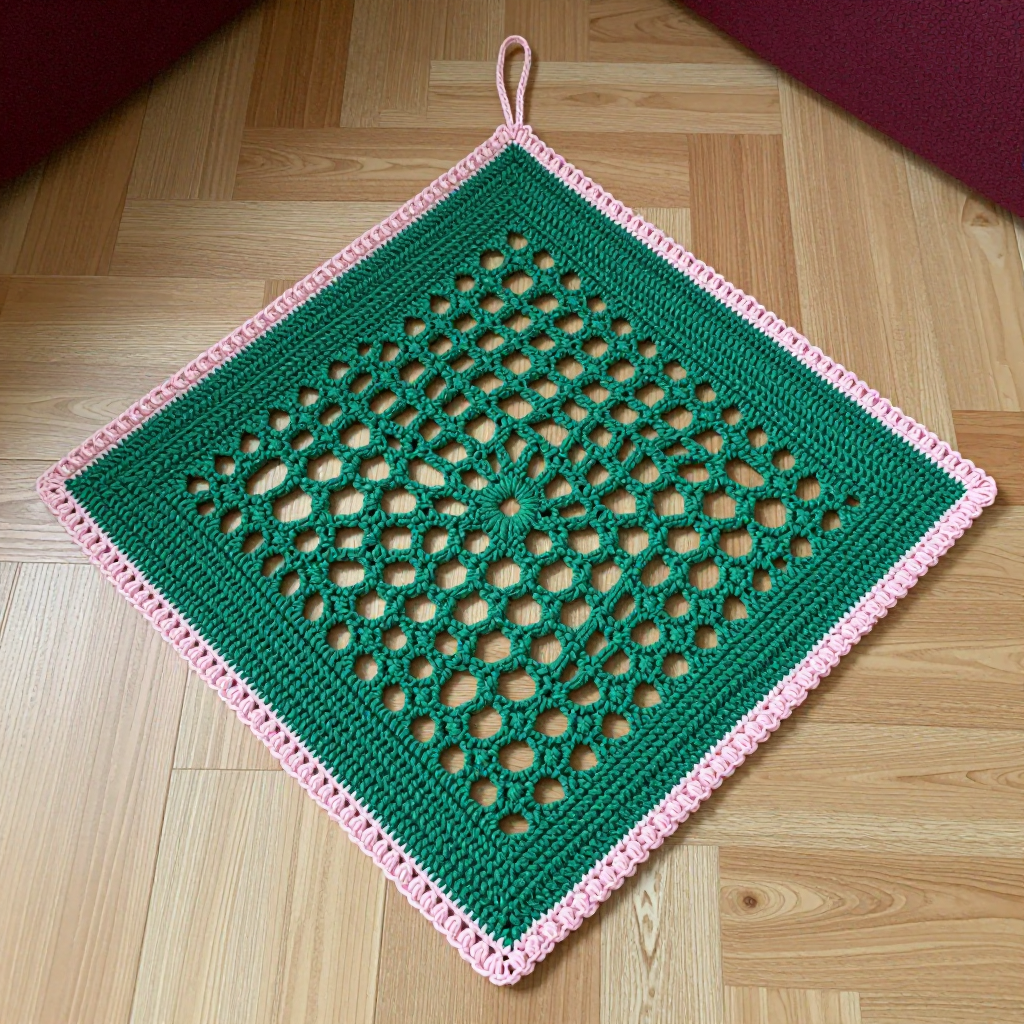
This double-thick crochet potholder is a perfect first kitchen project: it uses only one stitch, one color, and a simple border, yet it looks and feels beautifully handmade. It is made from two identical linked treble crochet squares in undyed natural cotton, held wrong sides together and joined around the edge with a single crochet border and a hanging loop. The linked treble stitch creates a dense, slightly ridged fabric that is thick enough to protect your hands from warm pans and dishes. The finished potholder is a calm, earthy off-white that fits into any kitchen, and it makes a lovely, useful gift.
Materials Needed
- Yarn: Worsted weight (4) cotton yarn, 100% undyed natural cotton, approx. 120 yards (110 m) total (about 60 yards / 55 m per square).
- Hook: 6 mm (J/10) crochet hook.
- Notions: Tapestry needle for weaving in ends, scissors, and a stitch marker (optional, for marking the first stitch of each row).
- Finished size: 6 x 6 inches (15 x 15 cm).
Abbreviations
- ch – chain: make a loop of yarn and pull it through the loop on your hook.
- st(s) – stitch(es): one completed loop or unit of crochet work.
- sl st – slip stitch: insert hook, yarn over, pull through both the stitch and the loop on your hook.
- sc – single crochet: insert hook into stitch, yarn over, pull up a loop, yarn over, pull through both loops.
- linked tr – linked treble crochet: a treble crochet stitch worked so that it links to the previous stitch, creating a dense, connected fabric (explained in Row 1).
- WS – wrong side: the back side of the fabric.
Gauge
12 stitches x 6 rows = 4 inches (10 cm) in linked treble crochet. To check, crochet a small swatch and measure a 4-inch section in the middle; if you have more stitches than 12, go up a hook size, and if you have fewer, go down a hook size.
Tips Before You Start
- Linked treble crochet is worked slightly differently from a standard treble: each new stitch links into the previous one, so keep your tension even and do not pull the links too tight.
- Cotton has little stretch, which is exactly what you want for heat resistance, but it can feel firm on the hands, so relax your grip and take breaks.
- Make both squares before joining so you can match their size; if one is slightly larger, block both to 6 x 6 inches first.
- When joining, work the single crochet border through both layers at once so the potholder stays double thick all the way to the edge.
Step-by-Step Instructions
Square (make 2)
Row 1: Ch 20, linked tr in 3rd ch from hook and in each ch across (18 sts).
Rows 2-12: Ch 2 (does not count as a st), turn, linked tr in each st across (18 sts).
Fasten off. Repeat for the second square.
Joining and Border
Hold the two squares with WS together.
Rnd 1: Join yarn with sc at a corner, sc evenly around the entire perimeter, working through both layers, with 3 sc in each corner. At one corner, ch 10 for the hanging loop, sl st to the same corner to secure, then continue sc around. Join with sl st to the first sc. Fasten off.
Assembly and Finishing
The squares are joined as you work the border, so no separate seaming is needed. Weave in all ends on the wrong side with a tapestry needle, threading each end through a few stitches before trimming. Block the finished potholder by misting it lightly with water and pinning it to a 6 x 6 inch square on a towel or blocking mat; let it dry completely so the corners lie flat and the hanging loop hangs straight.
Pro Tips and Variations
- For a thicker, even more heat-resistant potholder, add a third square in the middle before joining.
- Try a contrasting cotton color for the border and hanging loop to add a subtle two-tone look.
- Make a matching set in different earthy neutrals, such as oatmeal, sand, and mushroom, for a coordinated kitchen.